1. The Capability Ceiling of Graphite and the Silicon Opportunity
For years, graphite has served as the foundation of lithium-ion battery anodes, supplying reputable cycling security and well-established production procedures.
(Battery material)
Yet graphite’s theoretical certain capability of 372 mAh g ⁻¹ is quickly approaching its physical limitation, producing a basic bottleneck for next-generation power storage applications that require ever-higher energy thickness.
Silicon offers a compelling alternative, with an academic capability more than eleven times that of graphite, rising to 4,200 mAh g ⁻¹.
This remarkable ability allows batteries that are lighter, smaller, and capable of keeping substantially extra power per unit volume or weight.
The market response has actually been swift and considerable, with global deliveries increasing dramatically year over year and manufacturing capability expanding at an extraordinary rate.
Industry analysts consistently highlight silicon anode materials as one of the fastest-growing segments in the battery supply chain, driven by insatiable demand from electric lorries, consumer electronics, and arising high-power applications.
This fast expansion signals that silicon anode modern technology has emphatically crossed the limit from research laboratory research to industrial-scale commercialization.
2. The Commercialization Inflection Point
The transition from graphite to silicon-based anodes is no longer a remote guarantee yet an unraveling reality.
(Graphite)
In early 2026, a leading battery producer introduced its most recent generation of high-energy-density cells, attaining cell-level energy density well above 350 Wh/kg with low-expansion silicon-carbon anodes– a landmark that market viewers have identified as marking the beginning of large-scale commercial fostering of silicon anodes.
Major battery producers and automotive OEMs are currently actively incorporating silicon anode products into their product roadmaps, with numerous high-volume assembly line currently in procedure.
Silicon-graphite composites with modest silicon packing represent the lowest-risk commercialization pathway for the current phase of electric automobile transition, while pure silicon anodes, offering also greater ability, continue to be a longer-term suggestion as the market remains to improve manufacturing processes and address toughness challenges.
The application range is also broadening quickly past standard power devices and consumer electronic devices.
Today, premium electric cars, electric upright launch and landing airplane, and progressed robotics applications are becoming considerable development markets for silicon anodes, due to the fact that these industries require energy thickness levels that graphite-based systems can no longer sustain.
Silicon-carbon materials are commonly recognized as the trick to crossing this performance obstacle and allowing the next generation of light-weight, long-range energy storage.
3. The Technical Challenges That Held Silicon Back
Despite its exceptional capacity advantages, silicon has dealt with three interconnected technological barriers that have actually historically postponed its extensive commercialization.
(Silicon Anode Materials)
The very first and most essential obstacle is severe volume expansion.
Silicon goes through volumetric growth of numerous hundred percent throughout lithiation, causing mechanical stress that brings about bit fracture, electrode architectural collapse, and loss of electrical call with existing collectors.
The 2nd difficulty concerns the solid electrolyte interphase, a passivation layer that bases on the anode surface during the first cost cycle.
In silicon anodes, the severe volume expansion causes this layer to repetitively break and reform with each cycle, consuming lithium inventory and derogatory cycle life via irreparable lithium loss and fast capacity degeneration.
The 3rd obstacle is reduced intrinsic electric conductivity, as silicon’s semiconductor residential properties restrict electron transportation within the electrode, necessitating the unification of conductive ingredients to preserve adequate price ability.
These difficulties are adjoined: quantity development aggravates SEI instability, and bad conductivity compounds the efficiency destruction from both.
Overcoming this triad of challenges has actually required sustained innovation across multiple fronts– from nanostructural layout to composite designs to electrolyte chemistry– and has driven the growth of the industrial options we see today.
4.Silicon-Carbon Composites: The Leading Industrial Service
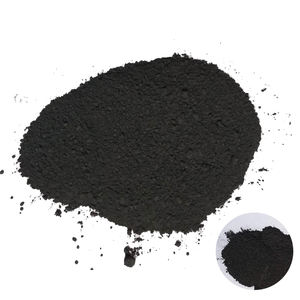
Silicon-carbon composites have become the leading business method to utilizing silicon’s capability while alleviating its disadvantages.
(Anode Materials)
The carbon component offers several crucial features: it gives a conductive matrix that makes up for silicon’s inadequate electrical conductivity, develops barrier room to accommodate volume adjustments, and reinforces interfacial interactions between silicon particles and the bordering electrode framework.
The industrial energy behind silicon-carbon anode products is undeniable, with production quantities expanding progressively and brand-new manufacturing facilities coming on the internet across the globe.
Numerous distinct manufacturing methods exist for silicon-carbon compounds, each with its own benefits.
CVD-based silicon-carbon materials entail depositing silicon onto carbon substratums through chemical vapor deposition, enabling accurate control over silicon content and distribution, and technical growth in this area is focusing on boosting silicon loading, enhancing carbon finishing layout, and improving preliminary coulombic efficiency and cycle stability.
Nano-porous silicon-carbon composites use another pathway, where the porous structure offers internal void room that accommodates silicon growth inward rather than exterior, reducing stress on the general electrode architecture.
Firms are also exploring pre-lithiated silicon-carbon materials, which compensate for preliminary lithium intake during SEI formation, enhancing first-cycle performance and general energy thickness.
The diversity of these methods mirrors the industry’s acknowledgment that no single service fits all applications– various silicon loadings, particle sizes, and composite architectures match various efficiency demands and expense targets, and continuous research continues to fine-tune each of these routes.
5. The Crucial Duty of Advanced Binders in Silicon Anode Efficiency
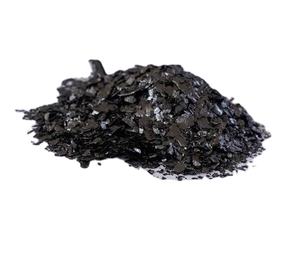
The binder system in a silicon anode is even more than an adhesive– it is an energetic element that fundamentally establishes electrode stability and cycling stability.
( Battery material)
Traditional graphite anodes depend on a standard binder system combining styrene-butadiene rubber with carboxymethyl cellulose, however, for silicon-containing anodes, this system often proves poor in holding up against the repeated stress from volume adjustments.
The binder should suit enormous mechanical pressure, preserve adhesion in between silicon bits and the existing enthusiast with thousands of expansion-contraction cycles, and add to maintaining the electrical network within the electrode.
Polyacrylic acid has emerged as a premium binder for silicon anodes due to its adaptability and strong bond residential or commercial properties, with many researches demonstrating that electrodes using PAA plus SBR binders continually provide the best efficiency, attaining high first coulombic effectiveness, high relatively easy to fix ability, and stable ability retention over prolonged biking.
Past PAA, scientists are examining ternary composite binders that integrate several polymer elements to accomplish synergistic effects, and some have reported ternary composite binders made especially for silicon-carbon mix anodes.
The binder market is responding to these advancing needs, with CMC/SBR systems optimized for silicon blends presently leading the market because of their ability to develop secure, high-capacity compounds, while water-based binders including SBR, CMC, and PAA are progressively related to next-generation silicon-based electrodes, reflecting the market’s push toward extra sustainable production processes.
Binder engineering has likewise emerged as a vital approach for reducing the coulombic performance trough– the characteristic dip in effectiveness caused by silicon quantity expansion, duplicated SEI renewal, and persistent lithium loss– as sophisticated binder layouts protect architectural stability and promote stable SEI development, directly dealing with the origin of capacity discolor.
6. Conductive Ingredients: Constructing the Electric Highway
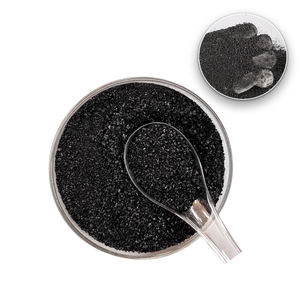
Silicon’s reduced inherent electric conductivity implies that conductive additives are not optional– they are essential for achieving sensible price capacity and cycle life.
(Silicon Anode Materials)
Typical carbon black has long functioned as the standard conductive additive in battery electrodes, yet the demands of silicon anodes have pressed the sector toward advanced carbon styles.
Carbon nanotubes and graphene have emerged as essential conductive ingredients driving technical advancement in this field, showing superior electrical conductivity, excellent mechanical flexibility, and distinct dimensional advantages compared to standard carbon black.
CNTs provide one-dimensional conductive paths that bridge between silicon fragments, while graphene uses two-dimensional conductive sheets that can twist around and adjoin bits, and three-dimensional carbon skeletons consisting of both carbon nanotubes and graphene sheets serve as a conductive matrix while additionally supplying barrier space to fit volume changes throughout fee and discharge.
The twin carbon network approach has actually revealed particular guarantee, with research study demonstrating that silicon nanoparticles effectively enveloped in reduced graphene oxide and carbon nanotube interlaced networks– with high area, huge pore quantity, and abundant porous structure– accomplish boosted lithium storage kinetics.
Advanced conductive additives also contribute to SEI security, as fluoride-doped carbon conductive ingredients make it possible for the building of LiF-rich SEI layers on silicon anodes, reducing overall anode volume expansion and enhancing biking stability without generating harmful side responses.
The growing demand for high-performance conductive ingredients is mirrored in the fast expansion of production capacity for specific carbon materials, particularly permeable carbons developed specifically for CVD silicon-carbon anodes, which are seeing amazing growth prices as producers seek to maximize their silicon anode solutions.
The choice of conductive additives need to be tailored to the certain silicon fragment size, morphology, and composite style used in each application– for silicon nanoparticles listed below a specific limit, carbon nanotube networks can provide effective electron transportation without too much additive loading, while for bigger silicon bits or greater silicon web content anodes, hybrid conductive networks combining several carbon designs might be required to keep performance.
7. The Evolving Supply Chain and Manufacturing Landscape
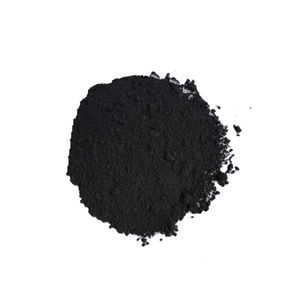
As silicon anode commercialization speeds up, the supply chain is undergoing quick change to fulfill expanding demand.
(Anode Materials)
Worldwide key battery silicon anode material makers consist of established chemical firms and specialized material vendors, with the leading players jointly holding a substantial share of the market, while new entrants continue to arise with cutting-edge production innovations.
Production capability is being developed throughout several areas, with numerous major centers having actually commenced commercial-scale operations in recent months, and extra capacity expansions are actively underway.
As an example, one leading supplier has begun EV-scale production of its sophisticated silicon-carbon product at a brand-new factory made for considerable yearly output, comparable to a substantial battery capacity, and this product has demonstrated compatibility with several cathode chemistries, making it possible for both high power thickness and ultra-fast charging capacities.
Various other companies have actually introduced supply agreements for silicon-carbon compounds made as drop-in substitutes for graphite in existing lithium-ion cell manufacturing processes, while joint endeavors between material specialists and chemical titans are advancing the industrialization of next-generation composite anode products.
Residential production ability is likewise increasing rapidly in different regions, with several business reporting enhancing month-to-month deliveries and introducing brand-new production lines that have already delivered examples to leading battery suppliers for efficiency testing.
The upstream basic material supply chain is additionally evolving, with essential basic materials consisting of metallurgical silicon, silane, graphite, and permeable carbon, and distributors guaranteeing stable product supply and quality uniformity with devoted manufacturing facilities.
International need for silane, particularly, is being spurred by silicon anode manufacturing development, as silane-based paths continue to be a primary manufacturing path for many producers, while different manufacturing methods– such as low-temperature reduction procedures– offer the possibility for even more economical and sustainable production.
Techno-economic analyses have demonstrated that these cutting-edge routes can significantly reduce the price and ecological footprint of silicon production, making them eye-catching choices for the next wave of ability growth.
As the whole ecological community– from resources to end up anode powders– remains to mature, the silicon anode industry is positioned for sustained development, with manufacturers and distributors functioning very closely to deal with technological obstacles, range production, and bring high-performance, cost-competitive options to the international battery market.
At Nanotrun, we are committed to progressing silicon anode modern technology through our thorough profile of high-performance products, consisting of high-purity silicon-based powders, custom-formulated silicon-carbon composites, and progressed conductive additive options engineered to meet the requiring demands of next-generation lithium-ion batteries.
( Battery material)
We recognize that the shift to silicon anodes is not a basic product replacement but a system-level change that calls for mindful optimization of every component, and our group functions carefully with clients to establish tailored options that address their details efficiency targets, making constraints, and expense purposes.
As the silicon anode market continues its fast expansion, Nanotrun stands ready to sustain battery suppliers, cell producers, and OEMs in making the change from graphite to silicon-enhanced electrodes, and we invite you to explore how our innovative material solutions can help you accomplish higher power thickness, longer cycle life, and superior battery performance.
Get in touch with us today to discuss your silicon anode product demands and discover the Nanotrun distinction.
8. Distributor
TRUNNANO is a globally recognized Molybdenum Disulfide manufacturer and supplier of compounds with more than 12 years of expertise in the highest quality nanomaterials and other chemicals. The company develops a variety of powder materials and chemicals. Provide OEM service. If you need high quality Molybdenum Disulfide, please feel free to contact us. You can click on the product to contact us.
Tags: Battery material,Silicon Anode Materials,Anode Materials
All articles and pictures are from the Internet. If there are any copyright issues, please contact us in time to delete.
Inquiry us